
The world of work has changed permanently. Three years ago, we still spoke about a temporary shift to working from home. Today, hybrid working has become the standard. For many organizations, it feels like navigating without a compass: empty office floors on Mondays and Fridays, overcrowded meeting rooms on Wednesdays, and the constant question of whether all those square meters are still necessary. The challenge is no longer whether you need to adapt, but how to turn your office back into a place where people actually want to come.

From cost line to strategic instrument
The traditional office, with rows of desks and fixed workstations, is no longer effective. Research shows that the average occupancy rate has permanently dropped to 50 to 60 percent of pre-2020 levels. At the same time, 73 percent of employees report higher productivity with flexible work models. That may seem paradoxical: less presence, yet better results. The explanation lies in a fundamental shift from where people work to when they work.
Employees mainly want autonomy over their working hours, not just over their work location. This need for flexibility supports employee retention more strongly than any other factor. Companies that ignore this and enforce a strict return to the office see employee turnover rise by 13 percent. Experienced employees are often the first to leave, resulting in the loss of years of knowledge and expertise.
Data as a foundation for smart decisions
Measuring office usage has become crucial. Yet 60 percent of organizations struggle to collect reliable data about how space is actually used. Traditional metrics, such as square meters per employee, have proven outdated. Companies that believed they were using 160 square meters per person discovered through sensors that the actual figure was closer to 603 square meters.
- Install occupancy sensors to gain real-time insight into how spaces are used.
- Analyze movement patterns for at least six weeks.
- Map underused areas and peak usage per zone.
- Link services such as heating and cleaning to actual usage.
These data often reveal surprising patterns. Quiet workspaces tend to be more popular than expected, while large meeting rooms are frequently empty. By using these insights, organizations can redesign their offices based on real needs rather than assumptions.

Implementation: from vision to reality
A successful shift to hybrid working requires more than a new interior. It starts with a thorough assessment of the current situation and ends with continuous optimization. The key steps are:
- Assessment and data collection: measure current occupancy and usage patterns
- Building buy-in: secure support from management all the way to the shop floor
- Setting a clear direction: define the role of the office within your organization
- Validating the design: test concepts with diverse user groups
- Phased rollout: start with a pilot to learn and adjust
- Continuous improvement: track, evaluate, and keep improving
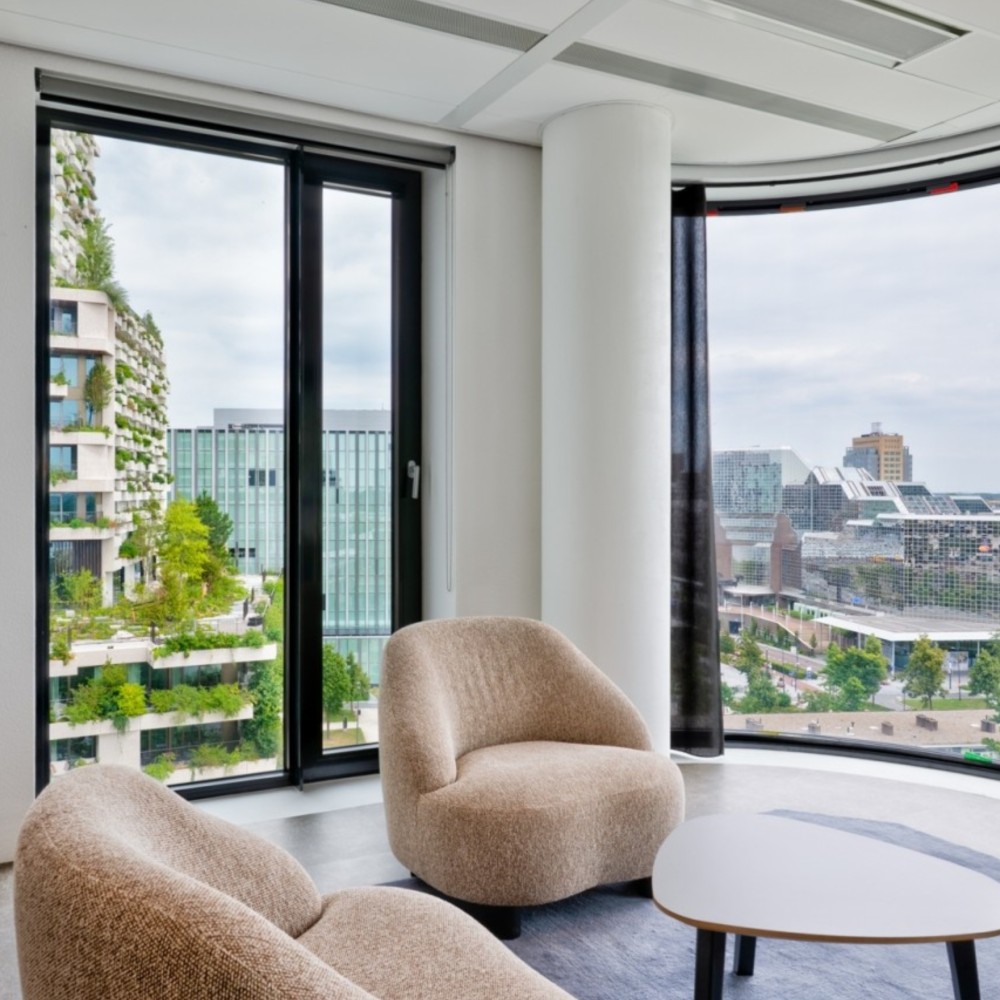
The future is flexible and purposeful
Hybrid working is not a trend, but the new reality. Organizations that embrace this and transform their office into a place of meaning will win the battle for talent. This requires an integrated approach in which strategy, design, and implementation go hand in hand. The result is a workplace that not only reduces costs, but also actively contributes to productivity, well-being, and business goals.
The offices that survive and thrive are the ones that adapt to human needs, not the other way around. They offer choice without chaos, flexibility with focus, and connection without obligation. For organizations that successfully implement this change, the office becomes what it should always have been: a place where great work happens, not because people have to be there, but because they want to be.
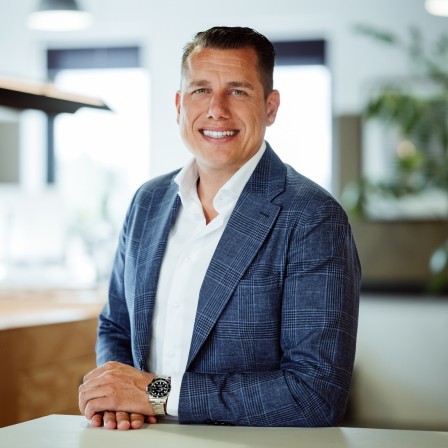
Edo Kievit
Chief Commercial Officer | Partner
Edo joined BESPARK in 2022 as Partner and Chief Commercial Officer (CCO). Edo is an expert in the field of real estate. With his in-depth knowledge of the real estate market and his strategic insight, he helps identify valuable real estate investments and optimize property portfolios. His expertise in real estate management and market trends enables him to realize successful and profitable real estate transactions.