
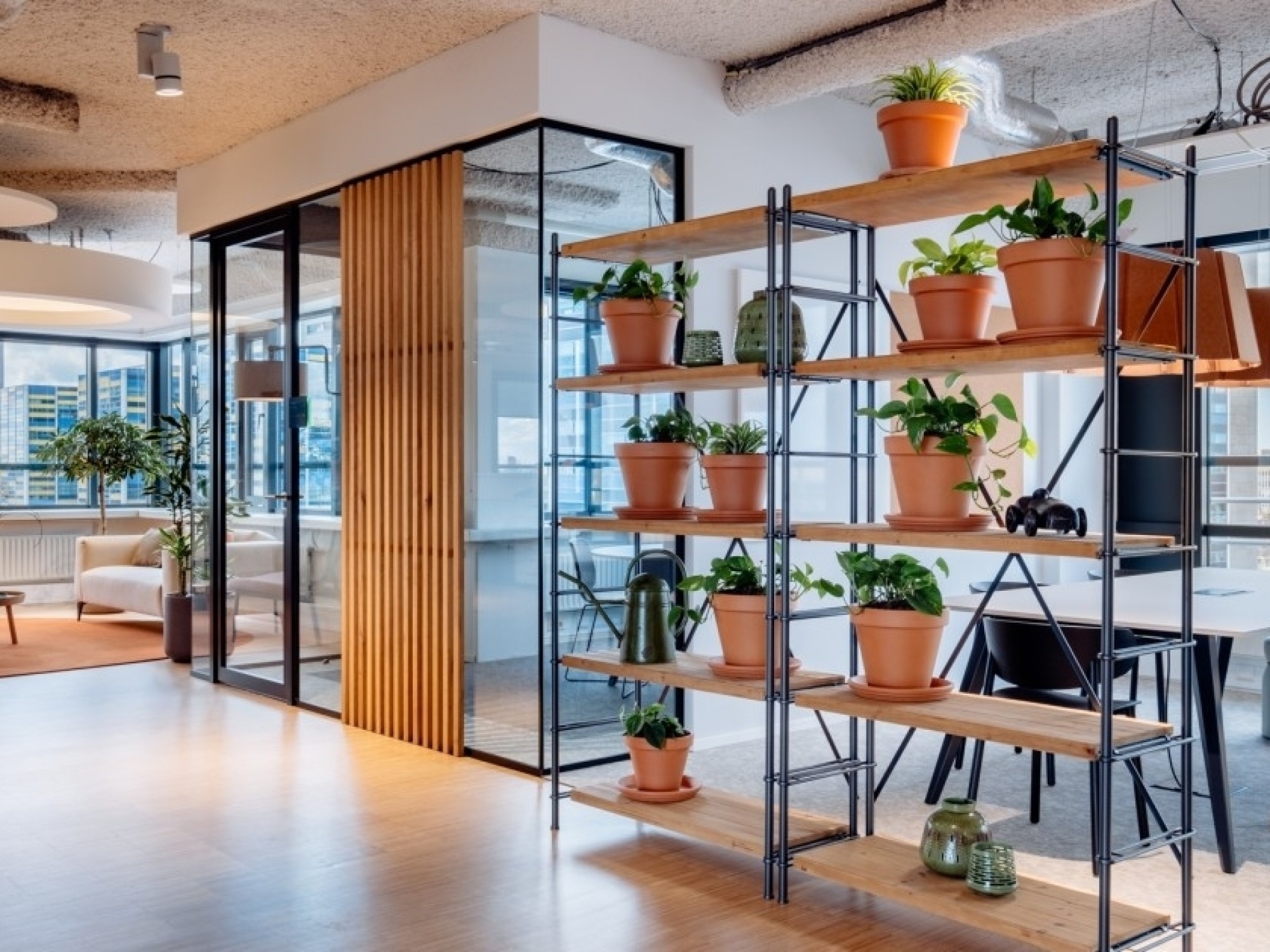
The workplace of 2026 is no longer a static concept. Where organizations once relied on fixed desks and meeting rooms, today’s developments demand a fundamentally different approach. Hybrid working has firmly taken hold, artificial intelligence is driving building systems, and employees expect an environment that actively supports their well-being and productivity. For decision-makers in mid-sized and large organizations, this represents a strategic decision point: do you hold on to outdated office concepts, or invest in a workplace that is ready for the future?
From experimentation to structurally hybrid working
Hybrid working has firmly embedded itself in the DNA of modern organizations by March 2026. More than two-thirds of all Dutch companies now apply some form of flexible working, with employees spending an average of 3.74 days per week in the office. But behind these figures lies a more complex reality. Employees no longer want to work from home or come to the office at random—they want deliberate choices that align with their tasks, energy levels, and responsibilities.
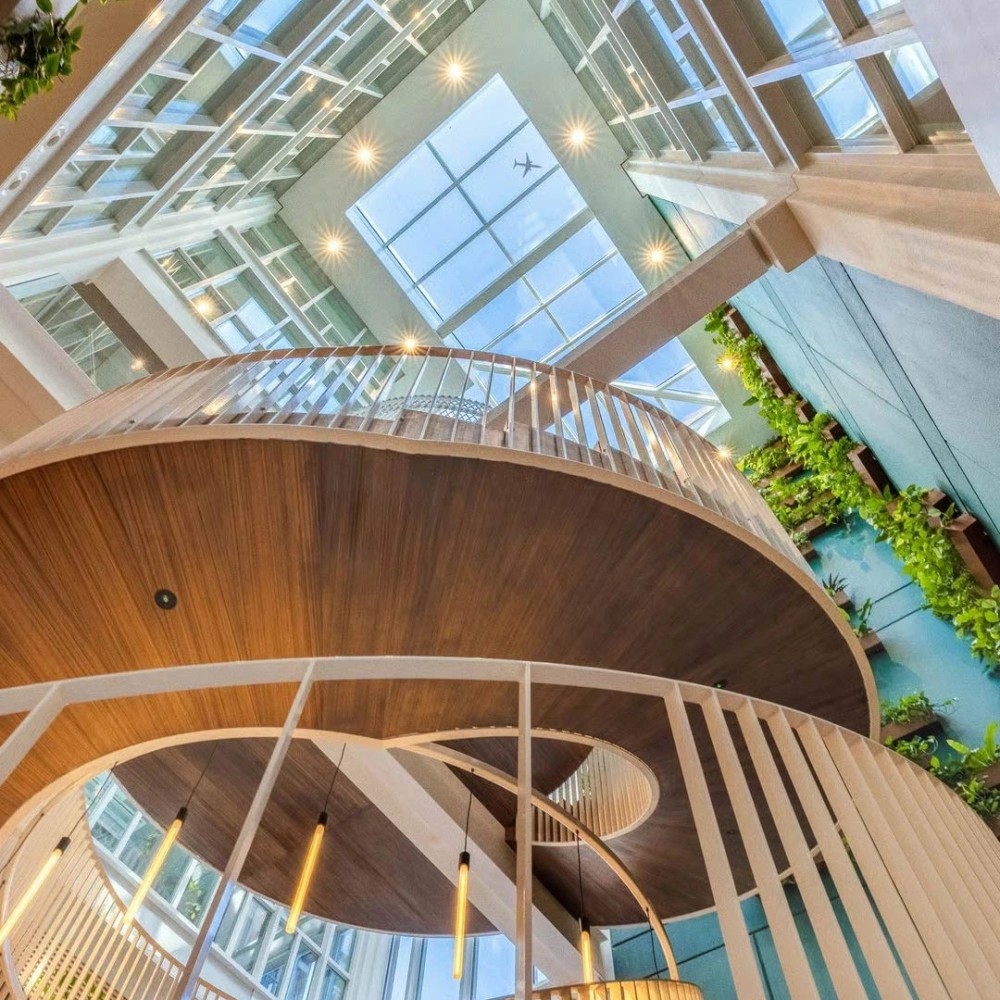
This shift has direct implications for office design. Only 25% of organizations still maintain fixed workstations, a sharp decline from 40% in 2024. Instead, flexible work environments are emerging, featuring touchdown spaces, activity-based zones, and dynamic reservation systems. The office is transforming from a “container for employees” into a strategic environment where different types of work—from focused tasks to intensive collaboration—each have their own appropriately designed space.
Organizations that redesign their offices around the real needs of hybrid teams report striking results. When offices provide collaboration spaces that cannot be replicated at home, acoustically optimized quiet areas, and technology that enables seamless connection with remote colleagues, both employee satisfaction and office attendance increase.
The key lies in design based on insights and data: occupancy metrics, employee feedback, and analyses of work activities reveal how spaces are truly used. This leads to a more efficient layout without compromising functionality.
Intelligent buildings as the new standard
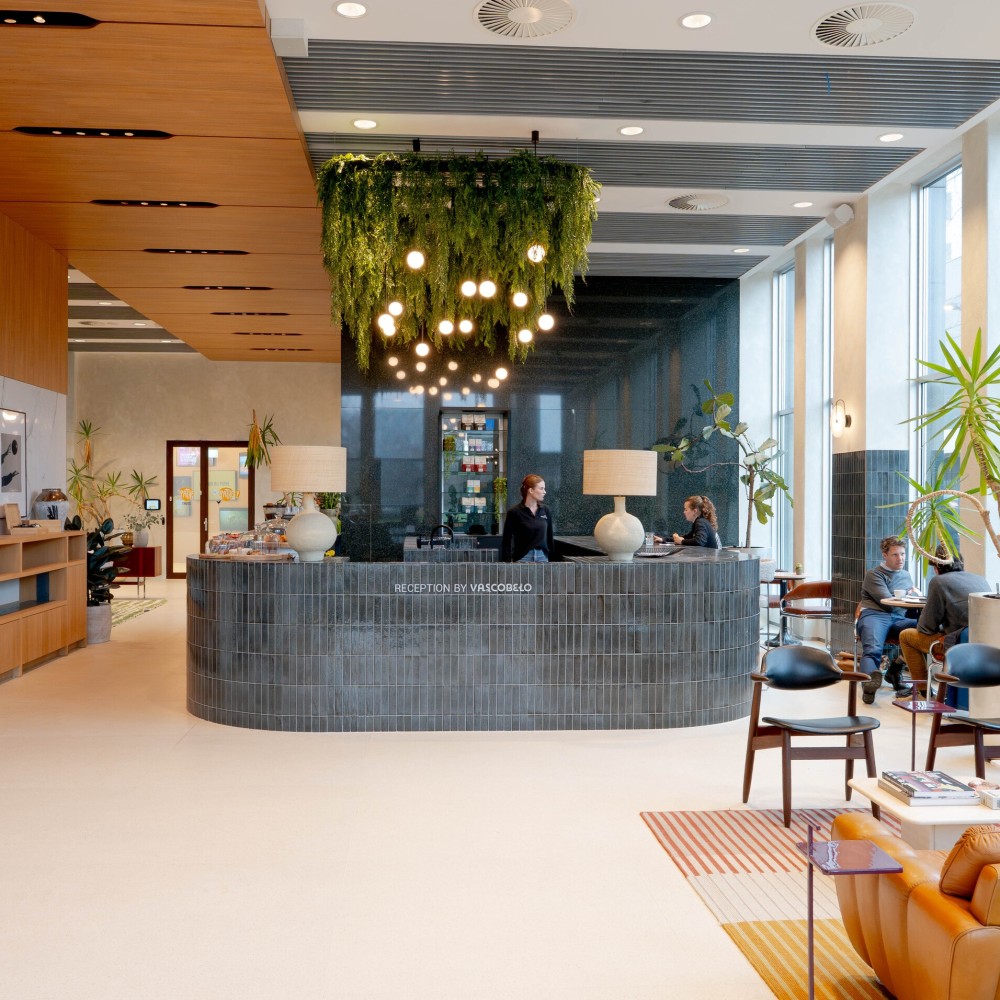
By 2026, artificial intelligence has evolved from a technological novelty into an indispensable layer in modern offices. Smart lighting systems automatically adjust color temperature and intensity based on daylight, biorhythms, and occupancy. Intelligent climate control learns user preferences and prevents recurring debates over the thermostat. Smart reservation systems predict when meeting rooms will be needed and proactively make suggestions.
For real estate professionals, this development represents a fundamental shift in building management. A modern office building equipped with thousands of sensors generates large volumes of data every day on energy consumption, space utilization, movement patterns, and facility needs. This is not a technological gimmick, but the foundation for more efficient operations. Organizations report that smart control reduces heating and cooling costs by 25%, cuts lighting energy consumption by 70%, and virtually eliminates disruptions through better-planned maintenance.
This technological progress also brings new challenges. Employees and regulators demand transparency regarding data collection, storage, and usage. Privacy by design, a clear data policy, and transparent communication about how systems make decisions are essential. Successful implementation therefore does not start with technology, but with an open conversation about values, privacy, and how intelligent systems can support—rather than limit—human autonomy.
Data as the foundation for smart office design
A key shift in 2026 is that decisions about office design are no longer based on intuition, but on measurable data. Organizations use sensors, reservation software, and occupancy systems that provide insight—by hour, day, and zone—into how spaces are actually used.
These data often reveal surprising patterns. Offices that are only well-occupied on Tuesdays, Wednesdays, and Thursdays can close entire floors or reduce energy consumption on quieter days. Meeting rooms designed for specific team sizes may turn out to be occupied only 40% of the time, allowing space to be repurposed into high-demand focus areas. Different teams also use the office in different ways: some primarily for collaboration, others as a quiet workspace, and some only in the mornings.
Successful implementation means that design does not stop at completion. Organizations start with a baseline layout, closely monitor usage during the first months, identify bottlenecks, and then make adjustments. Flexible construction choices such as movable walls, modular furniture, and adaptable systems—make it possible to implement these changes without major renovations.
The workplace as a strategic lever
The office trends of March 2026 do not point to the disappearance of the office or a return to traditional desk work. Instead, they show a fundamental rethinking of what an office should be. A future-proof workplace supports hybrid working, leverages smart technology for efficiency, prioritizes acoustic comfort, places well-being at its core, is designed sustainably and circularly, and continuously adapts based on insights into actual usage.
For Dutch organizations in professional services, tech, and life sciences, this means that office strategy is no longer a standalone project that can be fully delegated to an architect or contractor. It requires internal alignment, employee involvement, data collection, and continuous improvement. It also calls for partners who can guide the entire process—from strategy and workplace analysis to design, realization, and post-occupancy support.
Organizations that use their office as a tool for productivity, well-being, and sustainability see higher engagement, lower turnover, and a stronger company culture. For real estate owners and flexible workspace operators, this makes the difference between spaces that gradually empty out and workplaces that remain in demand. The future of the Dutch office will be shaped by the choices made today: thoughtful, data-driven, human-centered, and sustainable—managed as one integrated strategy from concept to continuous improvement.
The workplace as a strategic instrument
The trends are clear: hybrid working remains the norm, well-being is central, data underpins decision-making, sustainability is mandatory, and flexibility is essential. Organizations that ignore these developments risk inefficient workplaces, talent loss, regulatory challenges, and a decline in the value of their real estate.
The workplace of the future is not a static concept, but a dynamic environment that evolves alongside changes within the organization. This requires an integrated approach in which strategy, design, and execution are closely aligned. For strategic decision-makers looking to prepare their organization for the future, this is the moment to take action. The workplace is no longer just a cost center, but a strategic instrument for success.
Edo Kievit
Chief Commercial Officer | Partner
Edo joined BESPARK in 2022 as Partner and Chief Commercial Officer (CCO). Edo is an expert in the field of real estate. With his in-depth knowledge of the real estate market and his strategic insight, he helps identify valuable real estate investments and optimize property portfolios. His expertise in real estate management and market trends enables him to realize successful and profitable real estate transactions.