

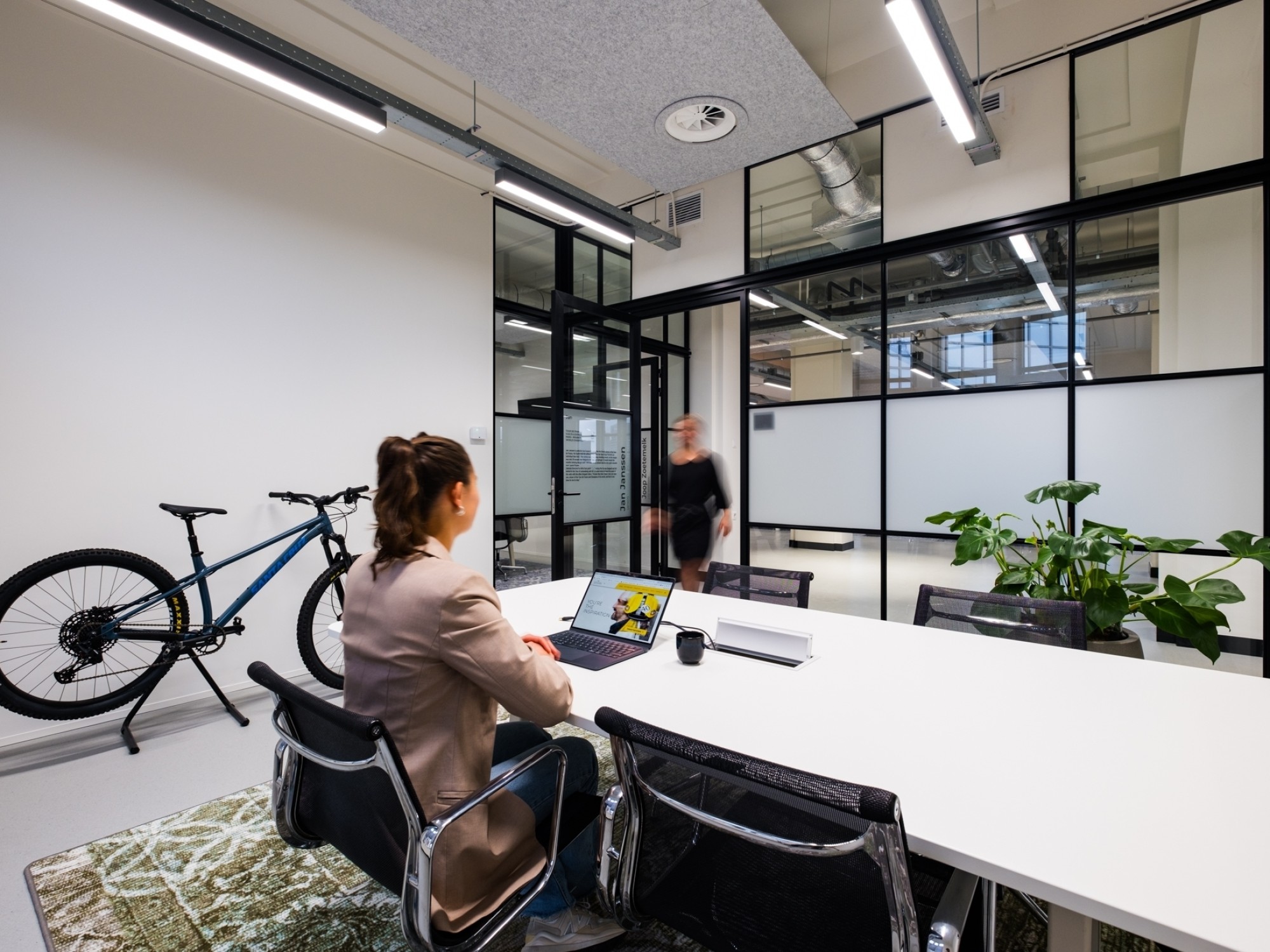
The modern workplace is on the brink of a revolution. While organizations are grappling with hybrid work models, rising energy costs, and increasing demands for sustainability, smart technologies and sensors offer concrete solutions. These technologies are transforming offices from static spaces into dynamic, data-driven environments that adapt in real time to the needs of employees and organizations.
From intuition to insight: the power of real-time data
The traditional office operated on assumptions. Facilities managers estimated how many workstations were needed, energy was consumed regardless of occupancy, and meeting rooms often remained empty despite reservations. This inefficiency costs Dutch companies millions of euros each year. Modern sensor technology breaks this pattern by providing continuous, objective measurements of space usage, climate, and energy consumption.
Smart sensors in lighting, heating systems, and access doors continuously collect data on occupancy, temperature, air quality, and energy use. This information is not analyzed afterward but processed and applied immediately. A meeting room that is still empty after fifteen minutes? The system automatically releases it. If one wing of the office is consistently underused on Fridays, the heating is adjusted accordingly.
For medium-sized and large organizations with complex real estate portfolios, this represents a fundamental shift. In the past, decisions about office layout and capacity were based on annual evaluations. Now, managers can adjust operations daily based on current usage patterns.
Hybrid working requires smarter solutions
he numbers speak for themselves: modern hybrid offices require on average only one workstation for every four employees. This stands in sharp contrast to the traditional one-to-one ratio. Without data-driven insights, organizations risk investing either too much or too little in office space.
Three quarters of Dutch organizations now use some form of hybrid working, but many still struggle with the practical implementation. Which teams are present on which days? How do you prevent Tuesdays and Thursdays from becoming overcrowded while Mondays and Fridays remain empty? Sensor technology provides answers by identifying patterns and making predictions.
- Occupancy analyses reveal peak moments and quiet periods
- Maps show which zones are popular and which remain underused
- Models based on historical data provide insight into future occupancy
- Automatic space suggestions help employees find the best workspace
These insights enable organizations to design their office space more efficiently without compromising the employee experience. In fact, by aligning spaces more closely with real needs, the quality of the work environment actually improves.
From intuition to insight: the power of real-time data
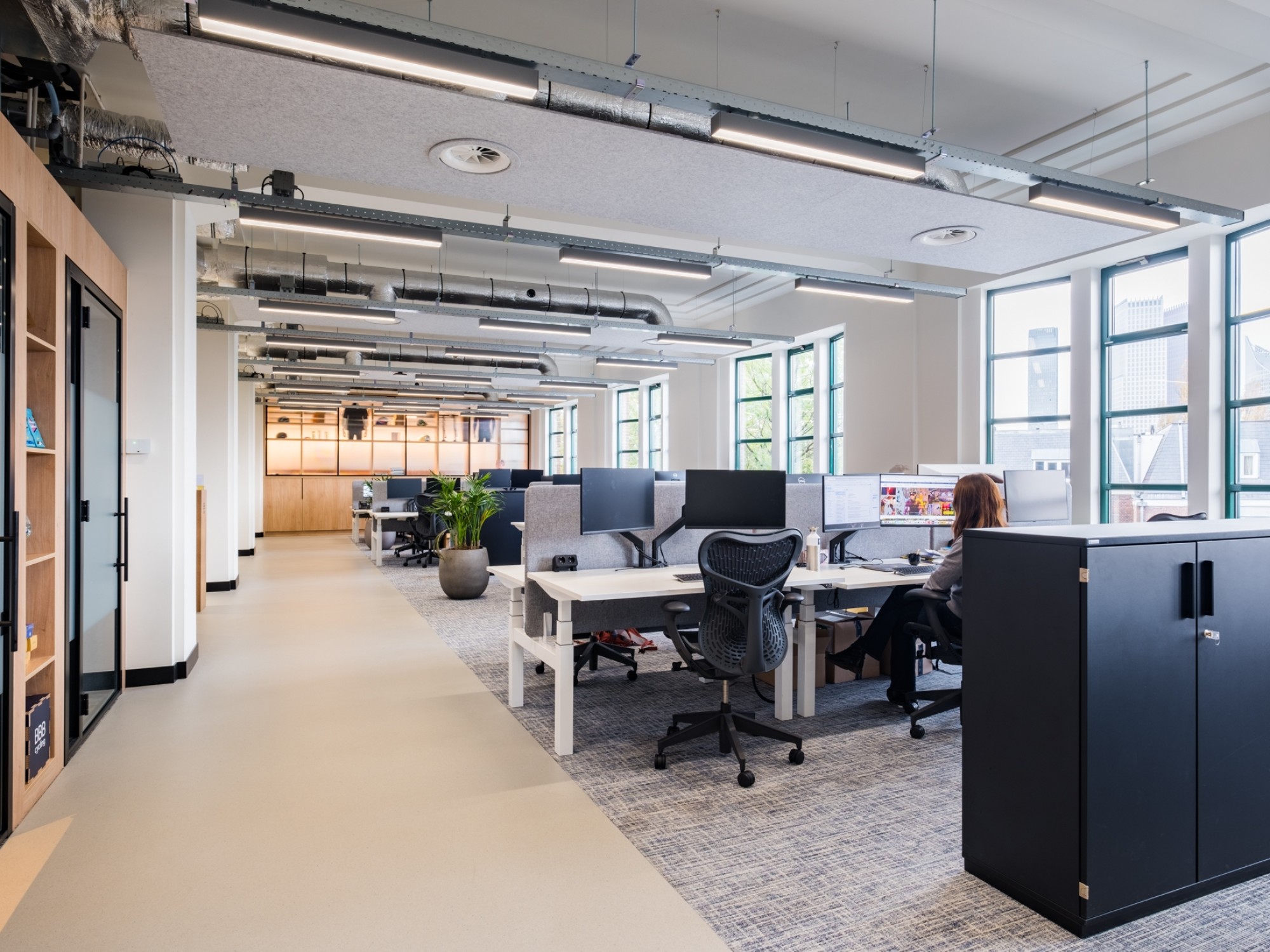
The traditional office operated on assumptions. Facilities managers estimated how many workstations were needed, energy was consumed regardless of occupancy, and meeting rooms often remained empty despite reservations. This inefficiency costs Dutch companies millions of euros each year. Modern sensor technology breaks this pattern by providing continuous, objective measurements of space usage, climate, and energy consumption.
Smart sensors in lighting, heating systems, and access doors continuously collect data on occupancy, temperature, air quality, and energy use. This information is not analyzed afterward but processed and applied immediately. A meeting room that is still empty after fifteen minutes? The system automatically releases it. If one wing of the office is consistently underused on Fridays, the heating is adjusted accordingly.
For medium-sized and large organizations with complex real estate portfolios, this represents a fundamental shift. In the past, decisions about office layout and capacity were made based on annual evaluations. Now, managers can adjust operations daily based on current usage patterns.
The financial business case: from costs to investments
The numbers speak for themselves. European companies achieve an average of 6.24 million euros in additional profit or savings through the use of smart technology. In the Netherlands, 60 percent of companies save more than one million euros per year, while 37 percent even exceed five million euros. These results come from several sources:
- Energy costs decrease by 20 to 30 percent through smart control systems
- Real estate costs can be reduced by up to 55 percent through more efficient space usage
- Maintenance costs decrease through predictive maintenance based on sensor data
- Higher productivity due to improved working conditions
For real estate owners and coworking operators, smart offices offer additional advantages. Buildings with a BREEAM Outstanding certification generate rental prices that are 12 percent higher. Investments in well-being facilities and in environmental, social, and governance (ESG) performance can increase property value by more than 20 percent. With the mandatory energy label C requirement since 2023 and the ambition to make buildings “Paris Proof” by 2050, sustainability has become a hard requirement.
Implementation: from strategy to successful execution
A successful transformation to a data-driven office begins with a clear workplace strategy. This requires a thorough analysis of current usage patterns, organizational culture, and future ambitions. Which goals are we pursuing: cost savings, sustainability, employee satisfaction, or a combination of these? These strategic choices form the foundation for all technological decisions.
Implementation works best when carried out in phases. Start with a pilot in one department or on one floor. Collect baseline data on occupancy, energy consumption, and climate conditions over a period of four to eight weeks. This measurement phase provides objective insights that replace assumptions with facts.
An integrated approach that combines design and execution reduces risks and disruptions. By bringing design, construction, and project management together under one roof, a seamless process is created with clear responsibilities. The contractor assumes responsibility for budget and planning, giving the client certainty about costs and delivery.
Future outlook: continuous optimization
A smart office is never truly finished. Its strength lies in continuous improvement based on current insights. Monthly reports reveal trends in space usage, energy consumption, and employee satisfaction. These metrics form the basis for further optimization. If certain areas are consistently underused, redesign can transform them into popular collaboration spaces. If energy consumption rises unexpectedly, predictive maintenance can prevent costly disruptions.
The use of smart technology and sensors in offices is still in its early stages. Self-learning systems are becoming increasingly capable of predicting usage patterns and allocating resources more efficiently. What seems revolutionary today will become standard tomorrow. Organizations that invest now in data-driven workplaces position themselves as leaders in a market where efficiency, sustainability, and employee well-being are becoming increasingly important.
For decision-makers in medium-sized and large organizations, the message is clear: the transformation to smart, data-driven offices is not a distant vision, but a current necessity. With the right strategy, technology, and attention to the human side of change, organizations can achieve not only cost savings and environmental benefits, but also create workplaces where employees thrive. At a time when talent is scarce and expectations are high, this can make the difference between leading the way and falling behind.
Sander Bank
Chief Executive Officer | Partner
Sander is partner and Chief Executive Officer (CEO) at BESPARK, or as he prefers to call it: Team Captain. Standing at 2.12 meters tall and with ambitions just as big, Sander knew from a young age that he would one day run his own company. That dream started at CBRE and really took shape when Iwan de Leeuw asked him at the end of 2015 to help build iL Office together. One day later, Sander quit his job. The rest is history.
In addition to his role as CEO, Sander is a BREEAM expert in the field of new construction and renovation. Whenever necessary, he ensures that our designs comply with BREEAM guidelines.
Hard work pays off, and Sander works hard like no other. It’s like top-level sport and not for everyone. “Entrepreneurship has to suit you and give you energy; otherwise you won’t be able to keep it up,” says Sander. But the results speak for themselves.