

How AI is transforming the hybrid workplace: from data to results
Hybrid working makes static office layouts obsolete
Organizations face a key challenge: how can office space be used optimally while teams remain flexible, engaged, and productive? The answer lies in continuous observation and data-driven optimization. AI plays a crucial role in this process. It analyzes large volumes of workplace data and translates them into concrete insights—insights that make spaces smarter, more adaptive, and more human-centered.
How AI turns workplace indicators into action
Sensors, environmental measurements, and reservation data have become commonplace. Yet in busy offices, this often results in little more than a large volume of raw data. AI can take this a step further by identifying patterns and predicting future needs, for example when meeting rooms or focus areas are consistently underused. Instead of relying on manual observations and spreadsheets, AI enables designers to make decisions based on real-time insights, freeing up valuable time for strategic thinking.
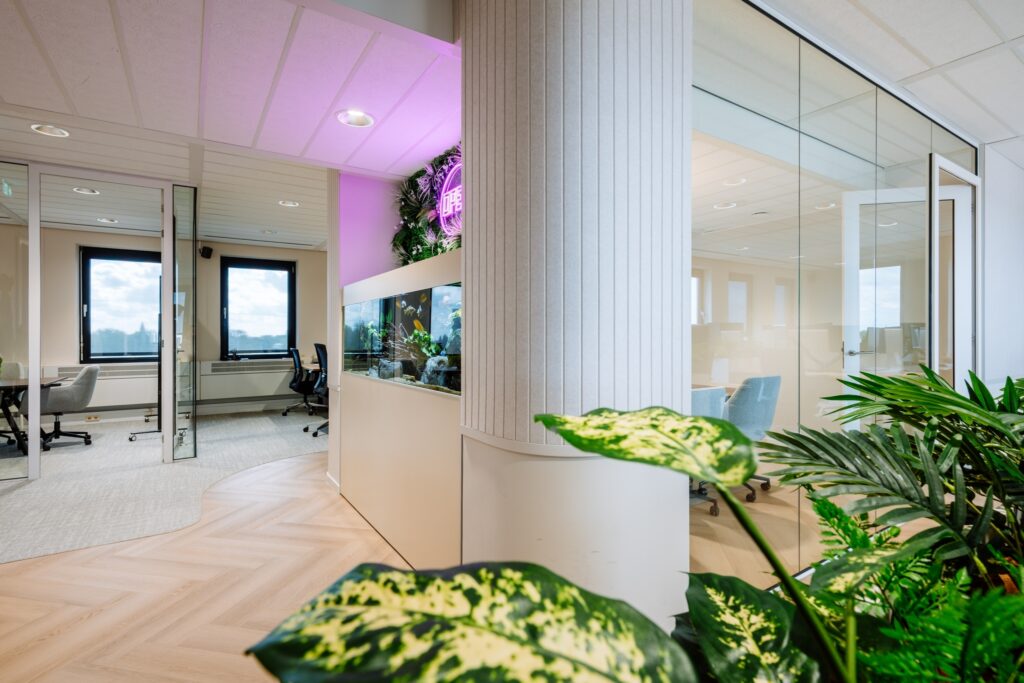
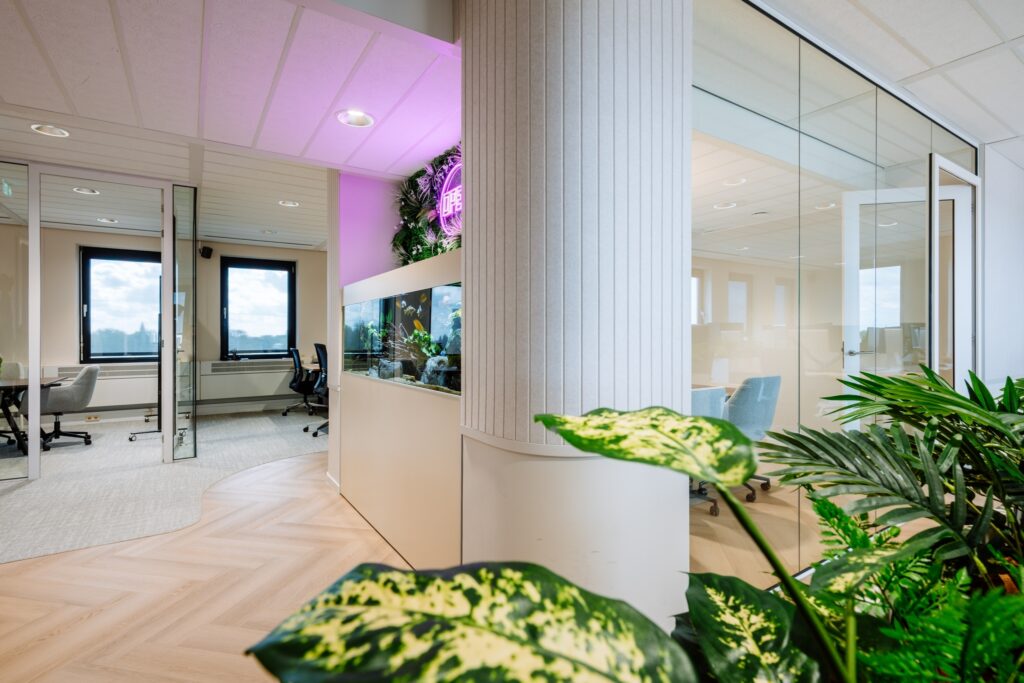
Key benefits of AI-optimized workplace layouts
- More efficient use of space | AI helps spaces to be arranged and repurposed more flexibly. Think fewer fixed desks and more zones for collaboration, quiet work, or informal meetings. This ensures office space is used effectively and purposefully, regardless of fluctuating occupancy.
- Dynamic optimization | Adjustments no longer need to be large-scale projects. With real-time insights, layouts can be refined quickly and precisely, based on reliable data rather than assumptions.
- A differentiated experience for each user | AI makes it possible to create more personalized environments. By allocating workspaces more intelligently, space is created for creative areas, focus zones, or social spaces. This turns the office into a place people want to be, rather than somewhere they are required
Applications across different sectors
Each sector faces its own specific challenges. AI provides tailored solutions for a wide range of situations:
From data to practice: an implementation roadmap
Het is één ding om de potentie te begrijpen, maar hoe ga je van inzicht naar impact? Hieronder een stappenplan:
Understanding the potential is one thing, but how do you move from insight to impact? The following steps provide a practical approach:
- Assess your data sources and quality | Map which data you already collect, such as sensor data, reservation data, and environmental information. Check reliability and identify any gaps.
- Select AI tools and define KPIs | Choose platforms that integrate with your existing systems. Define clear objectives such as space utilization, energy savings, or user satisfaction.
- Combine AI output with human input | AI identifies opportunities, but employees provide context. Involve users, facility managers, and leaders in interpreting the data.
- Run pilots, measure results, and scale up | Start with a small-scale pilot on one department or floor. Measure results against the KPIs, refine the approach, and expand step by step.
Challenges and ethical considerations
- Privacy and transparency | When tracking movements and patterns, data must be fully anonymized and aggregated. Clear communication with employees about what data is collected and how it is used is essential.
- Dependence on automation | AI cannot fully capture workplace culture, team dynamics, or subtle human nuances. Human input remains indispensable to ensure decisions truly fit the organization.
The value of AI and human strategy
AI will become a defining tool in how offices evolve. However, the real value emerges from the combination: data reveals patterns, but expertise translates those patterns into spaces where people can truly thrive.
At BESPARK, we guide organizations through this transition. From strategic advice to practical implementation, we ensure that technology and people come together in a workplace that truly works.